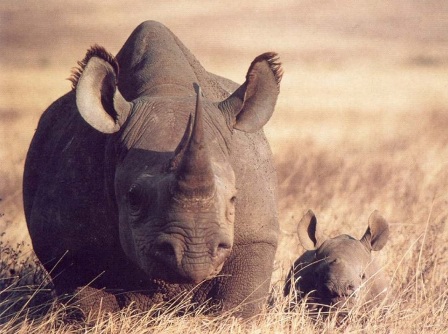
We’re back with some amazing Big Five fun facts, and today it’s all about the rhino. Good news for any of you who are interested in rhino conservation, every time you book with us you are giving something back to these magnificent beasts as we are proud sponsors of Save the Rhino International!
Finding that magical wildlife wow, regardless of any guarantee!
Rhino:
– Rhinos weigh up to 3500 kg (7,700 lbs), stand up to 1.8 metres (6 feet) tall at the shoulders, and can run up to 60km/h over a short distance and turn quickly in a small space. Able to live for 40-45 years, the females gestate their young for about 15-16 months and give birth to a calf every two years. Very fitting, a group of rhino is called a crash.
– Black and white rhinos are the two species to be found in Africa. The other three types – Indian, Sumatran and Java are all found in Asia.
– Rhino skin is extremely thick (1.5 cm) and is very sensitive to sun burn and insect bites. They wallow and cover themselves with mud to protect their sensitive skin.
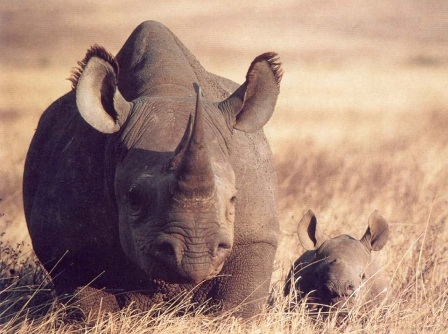
– A white rhino is actually grey and not white. The name derives from the Afrikaans word “wyd” which is reference to the wide square muzzle adapted for grazing. The white rhino has a pronounced hump on the neck and a long face. The black, or hooked-lipped rhino probably got its name from the dark wet mud in their wallows making them appear black. Both the black and white rhino have two horns, the longer of which sits at the front of the nose.
– Their closest living relatives are zebras, horses and tapirs all known as perissodactyls or odd-toed ungulates (three toes on each foot).

Where to bag the best rhino snap!
- If rhinos are on your Big Five list, Zimbabwe should definitely be on your Africa bucket list. The Matobo Hills National Park is a conservation success story, a great place to safari on foot and home to both the black and white rhino.
- Unfortunately, poaching is on the rise in the South Africa, recent estimates citing increases of 50%, but despite the rhino’s continuing threat of extinction, the Kruger is still another great spot to spy these two horned beasts. Once a no show, the national park now boasts a population of over 300 black rhino and over 3,000 white rhino.
- Over the past few years, Namibia’s black rhino population has grown to more than 1,500, and white rhino fans won’t be disappointed either, as a few hundred reside in the country. The main populations can be found in Etosha National Park, the floodlit Okaukuejo Rest Camp, allowing for 24/7 game viewing, with black rhino paying regular visits after dark.
Another highlight is Lake Nakuru, Kenya’s first national sanctuary, home to one of the world’s highest concentrations of black rhino.
Written by: Acacia Sales/Marketing team